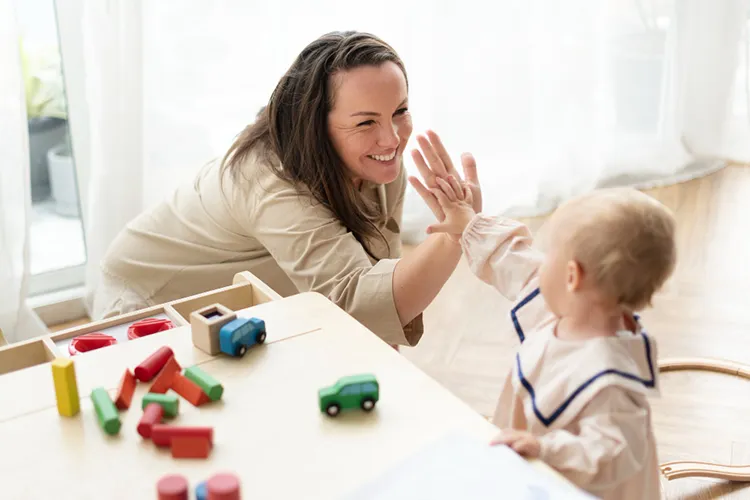
Toddlers (12 – 24 months)
Growing Confidence and Curiosity
At this age, children continue their journey toward independence and start developing a greater sense of who they are and what they want.
We build on the Practical Life and Sensorial activities provided in the baby room, expanding these to reflect each child’s individual interests and learning style.
Young toddlers engage in real-life, hands-on activities that encourage movement and social interaction. Many of the activities are designed to support social learning, as children begin to play with others more frequently. Staff work with children in small groups or one-to-one, role modelling positive play skills.
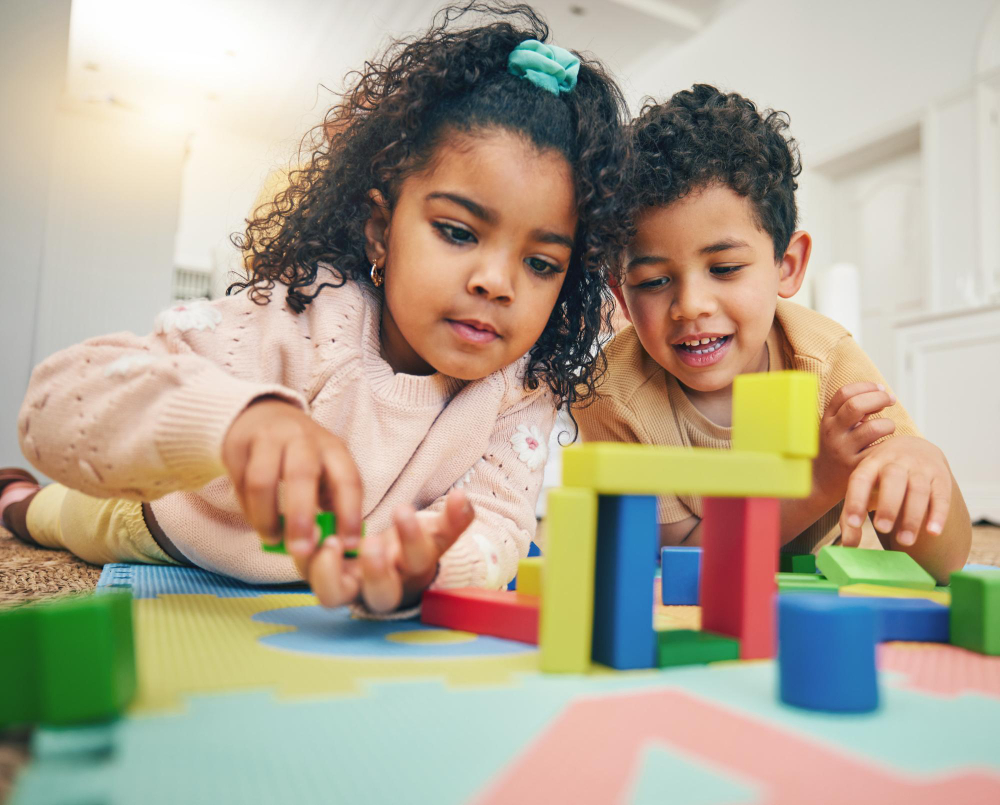
Early Foundations for Literacy and Mathematics
Early concepts of maths and literacy are built upon through:
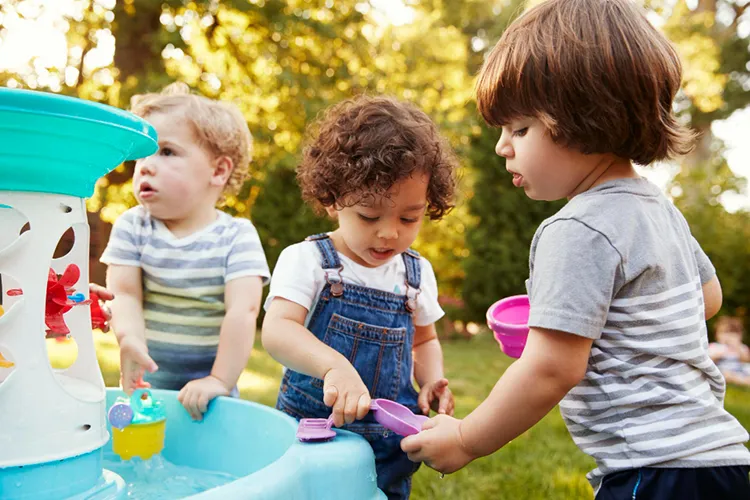
Examples of Schemas
Recognising and supporting these schemas ensures every child’s active needs are met, allowing them to explore and learn freely.
By following these patterns of behaviour, young children are equipping themselves with the knowledge and skills that form the foundation for almost everything we do in later life — from writing to driving a car.