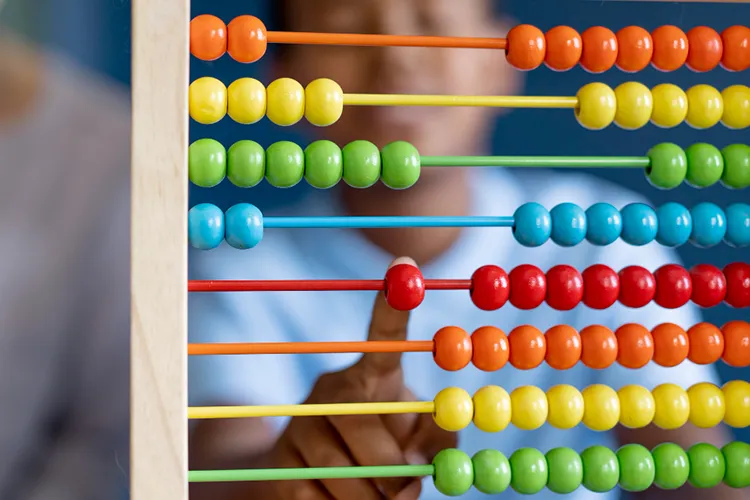
Older Toddlers and Preschool (24 months and upwards)
Independence and Discovery
At this stage, children use all they have learned so far and begin to explore the full range of Montessori resources available.
Materials are displayed in a clear, ordered way to encourage independence and allow for both group and individual work at each child’s own pace. The shelves evolve continually to reflect children’s current interests, as staff and children extend activities in creative ways.
Practical Life
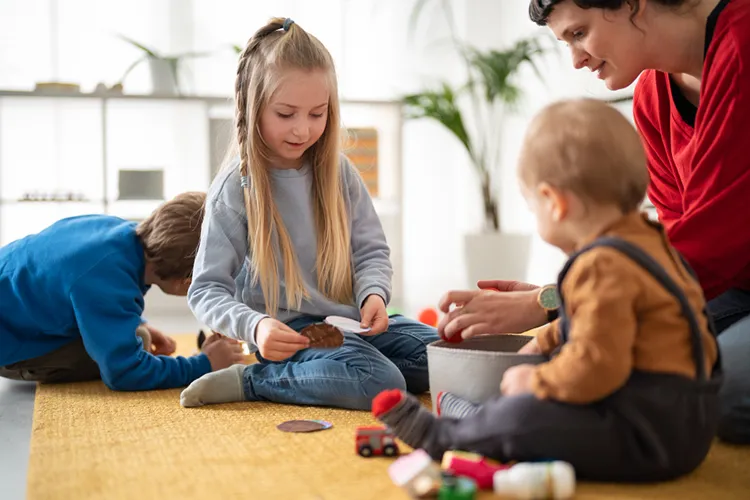
The Practical Life area includes activities where children develop everyday skills.
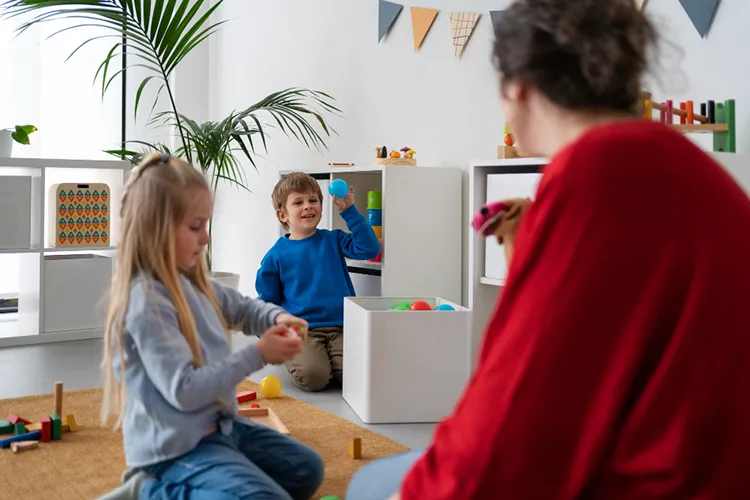
- NTransferring activities strengthen the finger pincer grip — preparing the hand for holding a pencil and writing.
- NChildren learn respect for their environment and take ownership of their space.
- NThey participate in daily routines: setting tables, washing up, preparing food, and welcoming visitors.

Sensorial Learning
In the Sensorial area, children refine their senses and develop concentration.
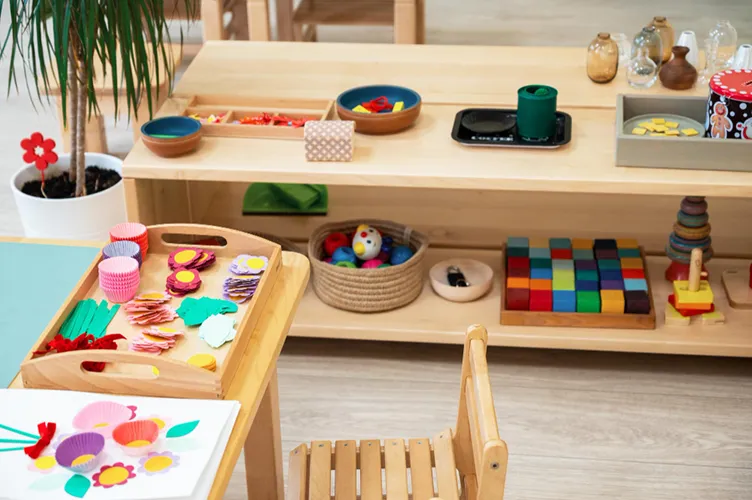
- NThey match sound cylinders to fine-tune hearing.
- NUse cylinder blocks to fit shapes into corresponding holes, improving hand-eye coordination and introducing the concept of dimension.
- NThese activities introduce early mathematical concepts through hands-on exploration guided by the senses.

Language Development
Language learning follows a tactile, multisensory path.
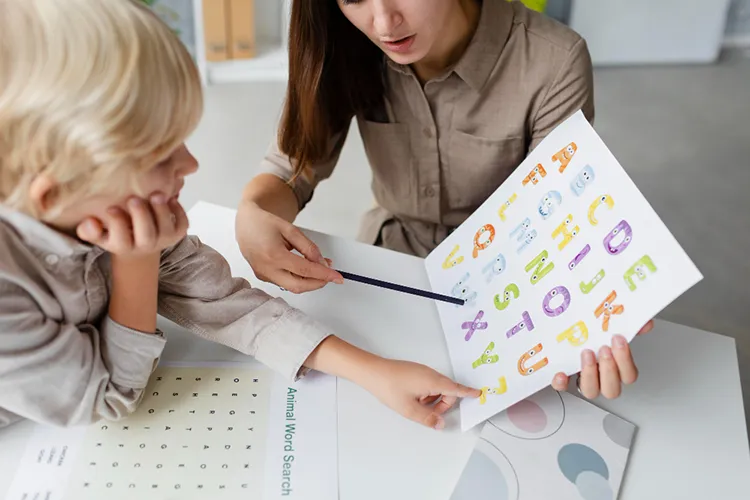
- NChildren are introduced to Sandpaper Letters, tracing each letter’s shape while saying its phonic sound.
- NThis method combines seeing, saying, and feeling, helping children absorb learning more effectively.
- NLanguage progresses naturally to phonic word building, writing, and reading.

Mathematics
Mathematics follows the same multisensory principles.
- NChildren trace Sandpaper Numbers, saying each number’s name and feeling its shape.
- NThey then move to associating the symbol with quantity, exploring units, tens, hundreds, and thousands.
- NFrom there, they progress to addition, subtraction, multiplication, and division — all learned through hands-on, concrete materials.
This active, tactile approach ensures children not only understand mathematical concepts but also enjoy and retain what they learn.